The SIHOO Doro S100 brings together a spring-assisted lumbar system and several useful fit adjustments for people who spend much of the day at a desk.
This sihoo s100 chair review looks at how its backrest, arms, recline, and seat depth may fit different work routines.
Doro S100 Review Summary
The quick verdict
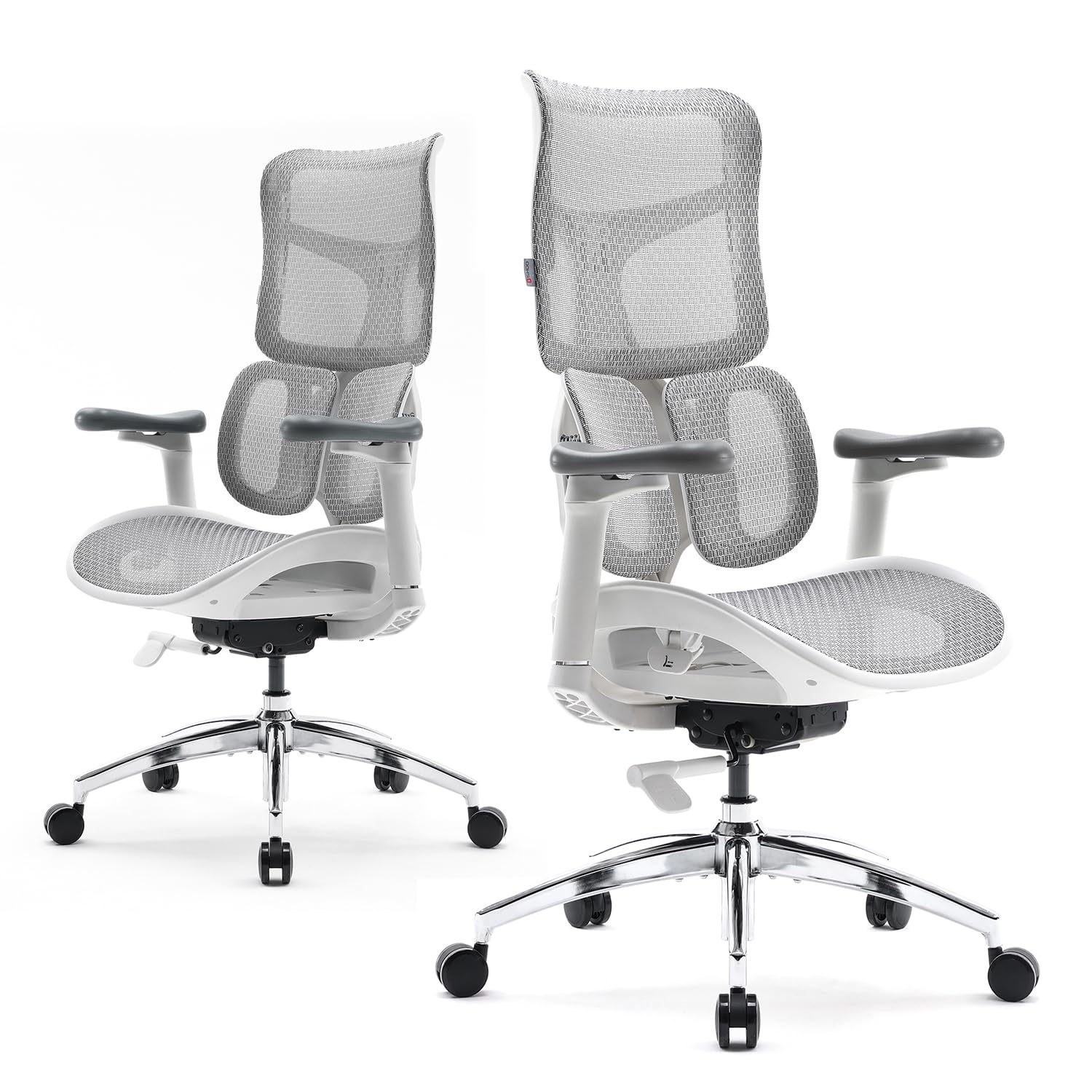
100+ ratings
Read Amazon ReviewsSIHOO Doro S100
The SIHOO Doro S100 suits desk workers seeking adaptive lumbar support, adjustable armrests, and a backrest that can be tuned to their height.
- Dual dynamic lumbar support uses four springs and a six-direction adaptive mechanism intended to adjust with different body shapes and postures.
- The upper backrest adjusts independently through five positions; the stated intended user height range is 5' to 6'3".
- Four-direction armrests move up or down by 2.76 inches, forward or backward by 1.18 inches, and rotate inward or outward by 72 degrees.
- Armrests coordinate with the backrest as the chair reclines.

Pros
- The adaptive dual-wing lumbar design offers more movement than a simple fixed support.
- Independent backrest adjustment gives users a way to change upper-back positioning without relying only on seat height.
Consider before buying
- The 135-degree maximum recline is suited to leaning back, but buyers seeking a deeper recline should check whether that limit works for their routine.
- The description does not provide overall chair dimensions or a maximum supported weight, so buyers with specific space or load requirements should confirm those details before choosing.
Read the full review summary
The Doro S100’s defining feature is its dual dynamic lumbar support, designed to adapt as posture changes.
A five-position independent upper backrest, adjustable seat depth, and coordinated four-direction armrests give buyers several ways to tune the chair around their desk and body.
It may suit home-office users who want more adjustment than a basic task chair offers, especially those who value lower-back and arm positioning.
The description gives a recommended height span for the adjustable backrest, but individual fit still depends on proportions, desk height, and how the chair feels in person.
The buying factors
Doro S100 Scorecard
Editorial scores reflect listed features and buyer fit; they are not laboratory measurements or customer ratings.
Lumbar adjustability
A dual-wing system with four springs and six-direction adaptive movement is the chair’s most distinctive support feature.
Backrest fit
The upper backrest has five positions, and the design is described for users from 5' to 6'3".
Armrest flexibility
The 4D armrests adjust in height, forward and back, and inward or outward, and coordinate with recline.
Seat fit
A 1.97-inch seat-depth range provides some scope to tune thigh support, with a waterfall-shaped cushion.
Recline range
The back reclines up to 135 degrees, offering a choice for leaning back between focused tasks.
Material and assurance details
High-resilience mesh is specified, along with BIFMA and SGS certifications, though the description gives limited construction detail.
Key Features and Specifications of Doro S100
- Dual dynamic lumbar support uses four springs and a six-direction adaptive mechanism intended to adjust with different body shapes and postures.
- The upper backrest adjusts independently through five positions; the stated intended user height range is 5' to 6'3".
- Four-direction armrests move up or down by 2.76 inches, forward or backward by 1.18 inches, and rotate inward or outward by 72 degrees.
- Armrests coordinate with the backrest as the chair reclines.
- Seat depth adjusts across a 1.97-inch range, and the cushion uses a waterfall-shaped front edge.
- The chair uses high-resilience mesh fabric and reclines to a maximum angle of 135 degrees.
- The chair is described as BIFMA and SGS certified.
Pros and Cons of Doro S100
Pros
- The adaptive dual-wing lumbar design offers more movement than a simple fixed support.
- Independent backrest adjustment gives users a way to change upper-back positioning without relying only on seat height.
- The armrests have several adjustment directions and move with the recline.
- Adjustable seat depth can help users fine-tune how the seat meets their thighs.
Consider before buying
- The 135-degree maximum recline is suited to leaning back, but buyers seeking a deeper recline should check whether that limit works for their routine.
- The description does not provide overall chair dimensions or a maximum supported weight, so buyers with specific space or load requirements should confirm those details before choosing.
- The stated height range is broad, but it cannot establish a comfortable fit for every body proportion; verify seat height and backrest positioning against your own measurements where possible.
Who Should Buy Doro S100?
Good fit
Consider the Doro S100 if you want a desk chair with adjustable lumbar support and several ways to align the backrest, seat, and arms.
The combination is particularly relevant if your posture shifts through the day or you share a workspace with someone who needs a different setup.
Its coordinated armrests are useful for buyers who alternate between upright typing and reclining for a short break.
Before committing, check that the armrest movement suits your desk clearance and that the stated height range is compatible with your torso and leg proportions.
The seat-depth adjustment and waterfall front edge are worth considering if thigh contact is a priority.
A range of adjustments can improve the chance of a suitable fit, but chair comfort remains personal, so use the return terms available at purchase if you need an in-person fit check.
Who should skip it
Look elsewhere if your routine calls for reclining beyond 135 degrees or if you need a chair selected around a specific weight capacity that you have not confirmed.
If you prefer a simple chair with few controls, the S100’s multiple adjustment points may add complexity without adding value to your setup.
How the Doro S100’s adjustments shape everyday desk use
Lumbar support that follows posture changes
The dual-wing lumbar unit uses four springs and a six-direction adaptive mechanism. Its design is meant to move with different postures, which may be useful for people who alternate between leaning forward and sitting back.
The actual fit depends on where the support meets your lower back, so check that alignment rather than assuming an adaptive system will suit every torso.
Backrest range and body fit
The independent upper backrest has five positions and is intended for users between 5' and 6'3".
That gives a meaningful height reference, but height alone does not determine fit: torso length and the position of the lumbar wings matter too.
If you are near either end of the range, pay particular attention to where the backrest meets your shoulders and lower back.
Arm support during work and recline
The armrests adjust vertically, front to back, and inward or outward, while coordinating with the backrest during recline. That variety can help align forearms with a desk or shift arm support when changing posture.
Measure desk clearance and consider whether the armrests can reach a comfortable position for your preferred typing posture.
Seat depth and recline in a home office
A 1.97-inch seat-depth adjustment lets the user change how far the cushion extends beneath the thighs, while the waterfall edge is shaped to broaden contact at the front.
Recline reaches up to 135 degrees, allowing a moderate lean-back position. These details make the chair adaptable for desk work with brief posture changes, though the available range should be compared with your own seating habits.
Alternatives to Doro S100
Home Office Desk Chairs alternative
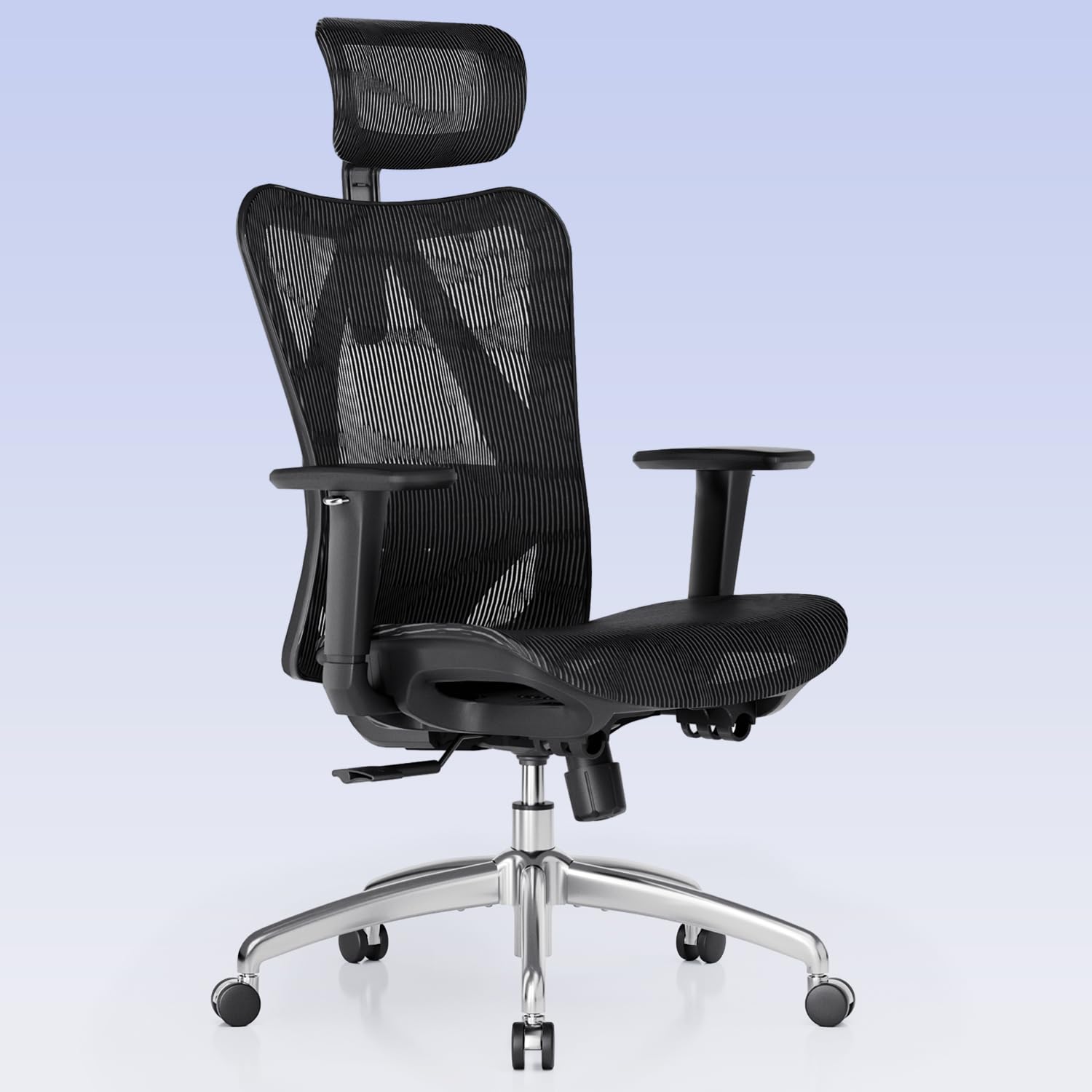
17,000+ ratings
Read Amazon ReviewsSIHOO M57 Ergonomic Mesh Office Chair
Choose the Doro S100 if its adaptive lumbar design, deeper maximum recline, and 4D arm adjustments best match your priorities. Consider the M57 if a headrest and an explicitly stated weight capacity matter more to your decision.
- The M57 has a height- and depth-adjustable lumbar support, tilting and lifting headrest, recline from 90 to 126 degrees, and a split backrest.
- Its description also gives a 330-pound capacity and reinforced aluminum base.
- The Doro S100 emphasizes spring-assisted dual dynamic lumbar support, a five-position upper backrest, and coordinated 4D armrests, with recline up to 135 degrees.
Home Office Desk Chairs alternative
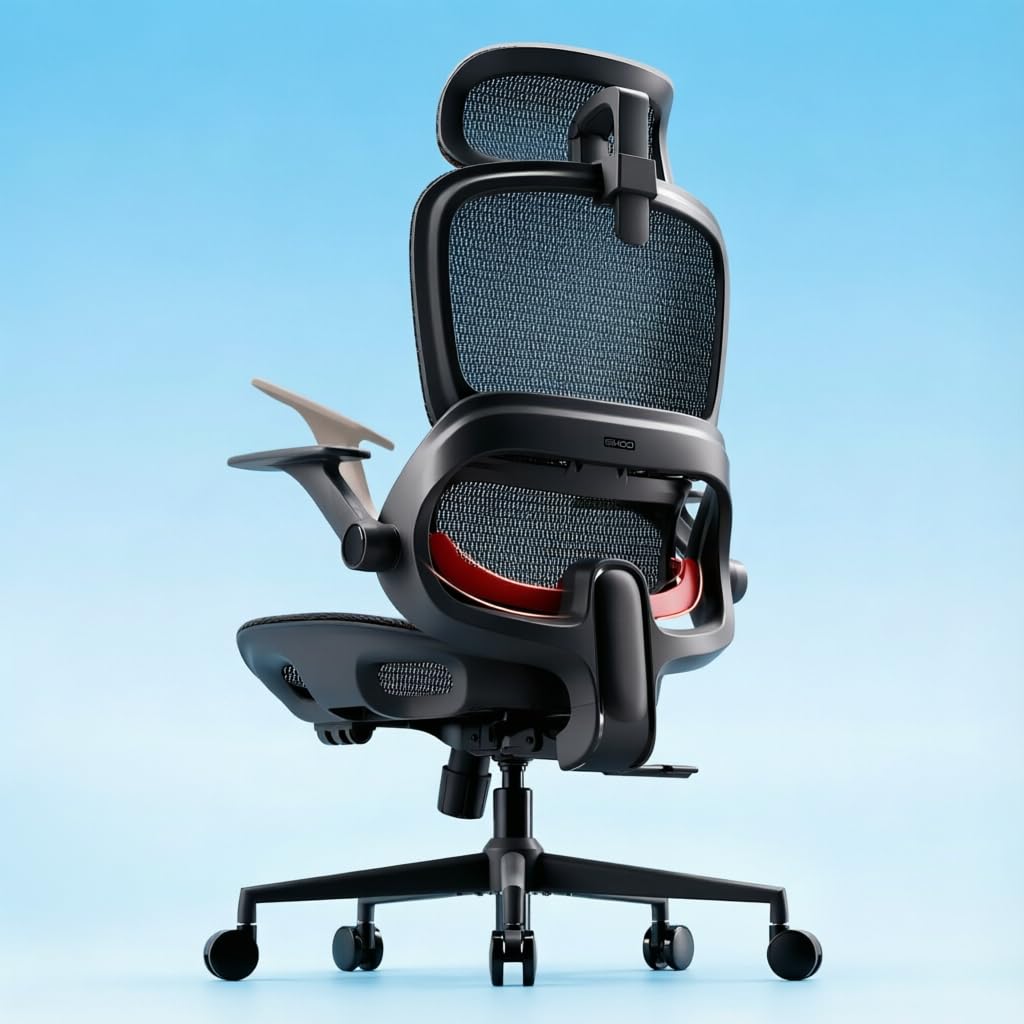
17,000+ ratings
Read Amazon ReviewsSIHOO B100 Office Chair
The Doro S100 is the stronger fit if fine-tuning arm position and upper-back height is central to your setup.
The B100 may suit a compact desk better if flip-up arms are useful, or if you specifically want its described headrest and full-mesh design.
- The B100 offers three recline angles up to 135 degrees, an extra-wide 2D headrest, flip-up armrests, full-mesh construction, and a stated capacity of up to 300 pounds.
- The Doro S100 has an independently adjustable five-position backrest, seat-depth adjustment, and four-direction armrests that coordinate with recline.
Is Doro S100 Worth It?
The SIHOO Doro S100 is worth considering for desk workers who want adjustable lumbar support, a backrest with several height positions, and armrests that coordinate with recline.
Its seat-depth range and mesh construction add practical fit options, while the stated user-height span helps establish an initial sense of suitability.
Before buying, confirm that the 135-degree recline limit, armrest clearance, and backrest placement fit your room and body.
For a buyer who values adjustability and can check those fit details, the Doro S100 offers a thoughtfully configurable office-chair design.
Your review at a glance
100+ ratings
Read Amazon ReviewsSIHOO Doro S100
The SIHOO Doro S100 suits desk workers seeking adaptive lumbar support, adjustable armrests, and a backrest that can be tuned to their height.
- Dual dynamic lumbar support uses four springs and a six-direction adaptive mechanism intended to adjust with different body shapes and postures.
- The upper backrest adjusts independently through five positions; the stated intended user height range is 5' to 6'3".
- Four-direction armrests move up or down by 2.76 inches, forward or backward by 1.18 inches, and rotate inward or outward by 72 degrees.
- Armrests coordinate with the backrest as the chair reclines.